CESMACH
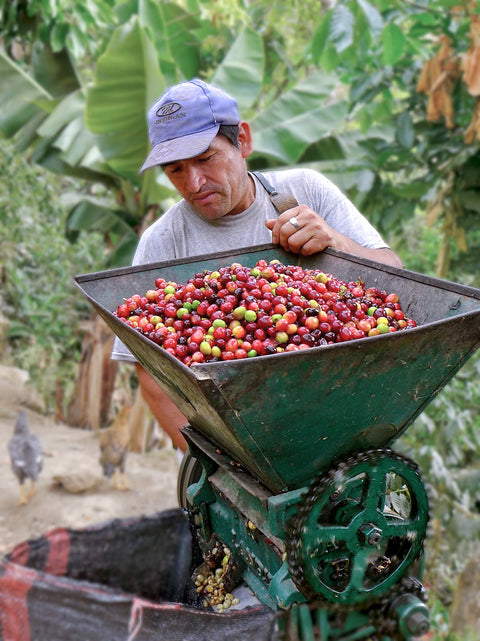
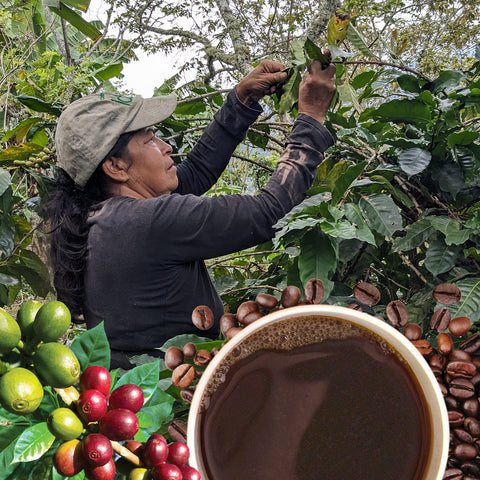
Formed in 1994, Campesinos Ecológicos de la Sierra Madre de Chiapas (CESMACH) is a coffee co-operative in the southern highlands of Chiapas, Mexico.
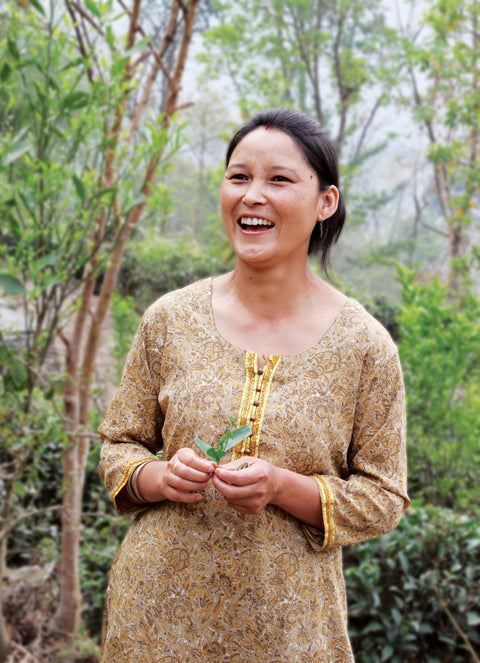
The members of the Small Farmer’s Tea Project (SFTP) in Kerala, India are predominantly marginalized small producers and members of tribal groups who have suffered from social and economic injustice for generations. The goal of the SFTP is to bring its members economic growth and control. The mountainous region of Kerala is environmentally sensitive and is experiencing massive erosion, deforestation, and acute water shortages.
The Mineral Springs Cooperative, also referred to as Sanjukta Vikas Cooperative, was one of the first small farming initiatives in the plantation controlled region of Darjeeling. The land that cooperative members live on was a tea plantation in the early part of the century but abandoned in the 1950s. The community has since depended mostly upon subsistence farming of corn, millet, potatoes and vegetables.
The Association of Small Coffee Producers, "Farmers' Hands" is an organization of small-scale coffee producers in the highlands of southwestern Guatemala.
The Las Colinas co-operative in El Salvador is collectively farmed and managed on the site of an old coffee plantation. The agrarian reform of 1980 redistributed land throughout El Salvador from the hands of large-scale coffee growers into the hands of coffee pickers and laborers alike. But, exorbitant interest rates on the loans used to purchase the land came at a high cost and today the producers still struggle to finance their debt and stay on their land.
The Association of Small Coffee Producers of El Salvador (APECAFE) is an organization that represents 11 coffee cooperatives located in different regions of El Salvador. APECAFE was founded in 1997 with the goal of uniting the cooperatives' 539 small-scale coffee farmers to produce and export their coffee to the international market.
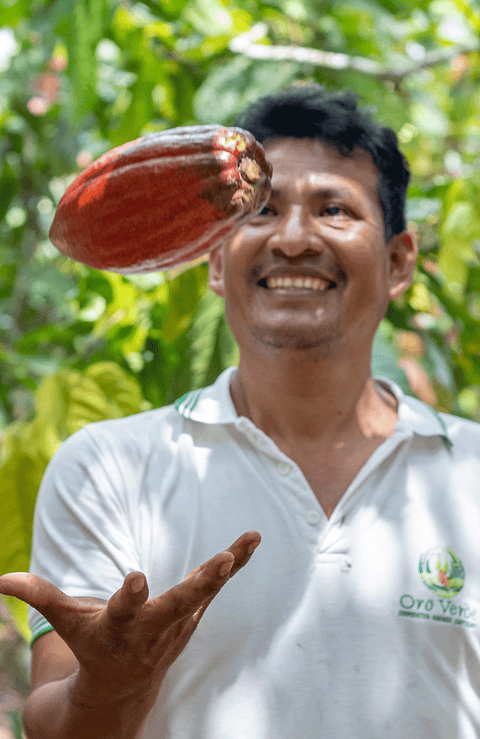
Fortaleza del Valle was founded in 2005 to improve living conditions for small-scale cacao producers in the Manabí Province of Ecuador. The co-operative is made up of five regional groups, with over 630 farmers as members. The average size of each farm is 2.5 - 12.5 acres, and the farms are diversified to include fruit and timber trees.
The story of El Guabo, one of Equal Exchange’s farmer partners, is a success story in grassroots organizing. In 1998, 14 small-scale banana farmers in southwest Ecuador decided to take the tremendous risk of sending one container (about 38,400 lbs) of bananas to Europe with the hope of selling it directly to a supermarket. By cutting out the middleman, they took the power back into their own hands.
The National Confederation of Dominican Cacao Producers (CONACADO) is an organization of small-scale cacao producers in the Dominican Republic. CONACADO began as a development project in 1985 during a low in the global cocoa market, to study how cacao fermentation techniques could improve the quality of cacao production in the Dominican Republic.
SOPACDI is located in Kivu, DRC, an area that has been wracked by ethnic- and gender-based violence that has destroyed the local economy and all but virtually extinguished the coffee sector. Coffee used to play an important role in the economy, however, years of warring factions and low prices gave the farmers little hope.